

Top 10 Metronome Exercises to Sharpen Your Rhythm Skills
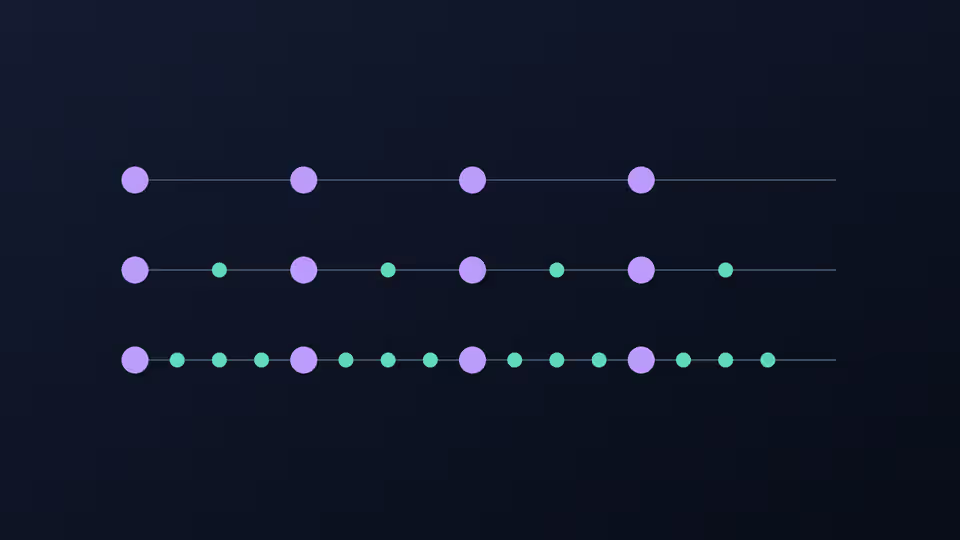
Use a comfortable tempo and a short phrase for these timing exercises. Accuracy and relaxed repetition matter more than reaching a particular BPM. Each exercise changes a different part of the task; move back to the previous step if the pattern breaks down.
Ten exercises with a clear listening goal
- One sound per click: clap or play a single note with each beat for four bars. Listen for inconsistent note placement rather than simply making every note loud.
- Even eighth notes: say “one-and, two-and” while playing two evenly spaced notes per click. Keep the second note from crowding the next beat.
- Sixteenth-note grouping: divide each click into four sounds, then accent only the first. Do not increase tempo until the unaccented sounds are even.
- Phrase endings: play a short four-beat pattern, rest for four beats, then return. Count through the silence rather than waiting for the next sound to tell you when to enter.
- Scale with one tempo: use a scale you already know. If fingering interrupts the pulse, shorten the scale or slow the click.
- Change the accent: repeat the same notes while stressing beat two, then beat four. Keep the underlying note spacing unchanged.
- Offbeat entry: leave beat one silent and begin on its “and”. Count aloud first so the rest has a defined length.
- Click on two and four: once ordinary counting is secure, use a slower click as those beats of a faster-feeling bar. Count the missing beats yourself.
- Half-time reference: halve the click frequency without changing your performance speed. Return to the full click and check whether you have drifted.
- Record and compare: record the same phrase twice, listen without the click, and note one specific change to try next. Avoid comparing different phrases or different tempos at the same time.
A small practice routine
Choose three exercises: one steady pattern, one with rests and one with subdivisions. Give each a short focused attempt, pause, then repeat. Stop when tension or fatigue makes the pattern worse; speeding up a strained movement is not a useful timing goal.
Use the click as a reference, not a score
A click helps expose inconsistency, but a groove can intentionally use timing offsets. First learn to place the pattern consistently, then experiment deliberately. In a DAW, consult Ableton Live manual: recording and metronome/count-in controls for the actual metronome controls. These practice suggestions are not a product review or a promise of a specific result.
Related: recording with a metronome and planning metronome practice.
Featured image: Original rhythm practice diagram comparing quarter-note beats, eighth notes and sixteenth-note subdivisions. Original illustration by Deadloops.