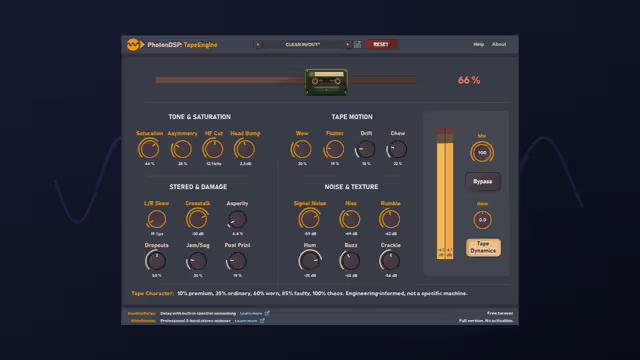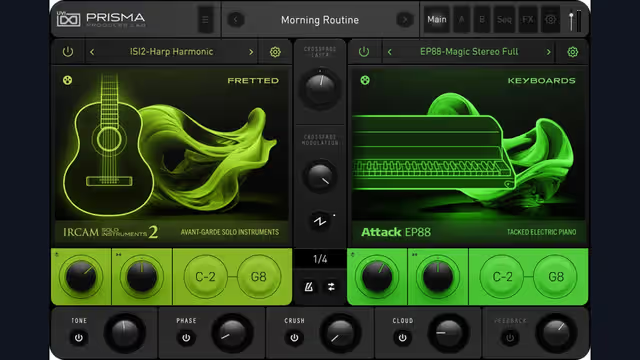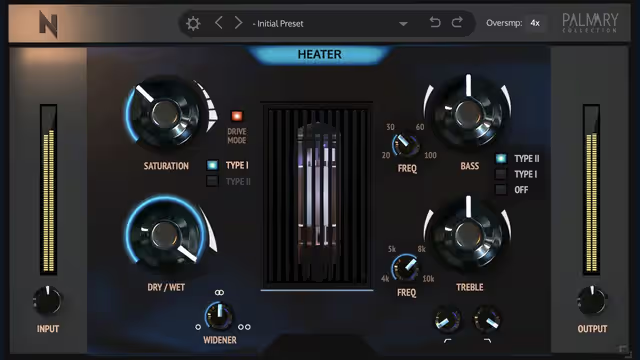


Analog Obsession has built a reputation for giving away analog-flavoured plugins, and Razorclip is one of the stores where those offers have appeared. If you saw a free-plugin announcement and wondered whether it is worth your time, this guide walks through how to check the offer, install the plugin safely and put it to use in a mix.
Free offers change quickly. Any promotion tied to a store may have ended, so confirm the current price and availability on the official Razorclip or developer page before you plan around it.
Why analog-style freebies are worth having
Analog-modelled tools tend to add gentle saturation, level-dependent behaviour and a bit of character that clean digital processors skip. A free compressor, EQ or saturator in that style can quickly give a plain mix more weight. It will not fix a weak arrangement, but it can make a good idea feel finished.
If you want examples of this developer's work, our posts on the LAEA optical compressor and another Analog Obsession giveaway cover related releases.
Check the offer before you click
- Open the store page yourself by typing the address or using the developer's own links, not a random mirror.
- Look for the price at checkout. A genuine free deal shows a zero total, sometimes after adding the item to a cart with a coupon.
- Read the licence text: personal, commercial, or both.
- Note which formats and operating systems are supported (VST, VST3, AU, AAX, Windows, macOS).
- Check whether an account or email sign-up is needed, and decide if you are happy with that.
If the plugin shows a price, the promotion has probably ended. Do not chase cracked copies. They are unsafe, unfair to the developer and often bundled with malware.
Installing without headaches
- Download only from the store or developer page and keep the licence email or key in a safe place.
- Close your DAW before running the installer.
- Confirm the install folder matches the one your DAW scans for VST3 or AU plugins.
- Rescan plugins in your DAW, then search for the plugin by name.
- Load it on a test track first, not in the middle of a finished session.
Using an analog-style processor well
Mind your levels
Analog emulations react to input level, so a signal that is too hot will distort sooner than you expect. Read our gain staging guide and aim for a healthy signal before the plugin, then match the output volume so you judge tone, not loudness.
Use it as a colour, not a cure
Start with small moves. If you cannot hear a difference at first, push it briefly to hear what it does, then back off until it sounds natural. Bypass often, and level-match every time.
Try it in different spots
- On a drum bus for glue and weight.
- On vocals for gentle density before other processing.
- On the mix bus at low settings, if the plugin is designed for that.
Quick reference table
| Question | What to check | Where to find it |
|---|---|---|
| Is it still free? | Cart total or price label | Official store page |
| What formats? | VST3, AU, AAX list | Product page or manual |
| Can I use it commercially? | Licence terms | EULA or FAQ |
| Will it run on my system? | OS and DAW compatibility | System requirements |
Build a small free toolkit
One good freebie per job is better than fifty duplicates. Our free VST collection is a good place to fill any gaps, such as a limiter, an EQ and a reverb, so that each free tool has a clear role.
A simple workflow for testing any new freebie
Free plugins pile up fast, and the danger is never actually learning any of them. Give each new tool a short trial. Load it on a track you know well, spend ten minutes with the main controls, and write one line in a notes file about what it did to the sound. If the line says "nothing special", uninstall it and move on.
- Session one: find the two or three controls that matter most and ignore the rest.
- Session two: use it on a real project and print the result to audio.
- Session three: decide whether it earns a permanent place in your template.
This habit keeps your plugin list short and your mixes faster. It also stops you from installing something just because it was cheap, when a stock plugin would have done the same job.
Storing licences and updates
Keep a text file with the store name, purchase date, licence key and the download page for every free plugin. Developers update tools to fix bugs and add new plugin formats, and having the original page makes it easy to grab the latest version later. Back up the installer somewhere safe as well, in case the store page changes.
FAQ
Is the Analog Obsession offer still available?
Not necessarily. Promotions run for a limited time, so open the official page and check whether the price is zero before doing anything else.
Is a free plugin lower quality than a paid one?
Not by default. Many developers give away polished tools to introduce their brand, though a free version sometimes has fewer features than the paid one.
Do I need an account to claim it?
Often a store account is required so the licence is linked to you. Read what the sign-up asks for and use only official pages.
Can I use it on commercial music?
That depends on the licence. Read the terms on the product page and keep a copy of your receipt.
Key takeaways
- Confirm price and availability on the official page before relying on a deal.
- Install from official sources only, and never use cracked copies.
- Level-match and bypass to judge analog-style plugins fairly.
- Keep a small, purposeful free toolkit instead of hoarding.