
Spitfire Audio is a British developer best known for orchestral libraries, but it also releases smaller creative instruments and free titles through its own app. A cassette-flavored synth fits that pattern: it delivers warm, wobbly, lo-fi tones that suit a wide range of genres. This article explains what makes cassette-style synths appealing, how to install a Spitfire freebie safely, and how to use one in your music.
Check first: free releases can be limited-time or permanent. Confirm the current status and requirements on Spitfire Audio's official website.
Why cassette-style synths sound so good
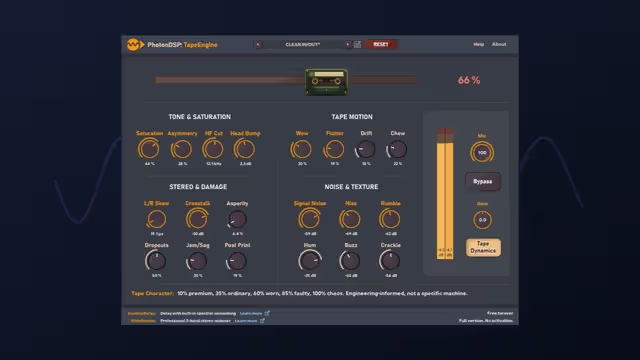
Tape has natural imperfections. Pitch drifts slightly (wow and flutter), high frequencies roll off, and a soft compression and hiss add glue. Instruments that model or sample this character feel nostalgic and organic, which is why they turn up in lo-fi hip hop, ambient, indie and film music.
Getting the instrument
- Go to the Spitfire Audio website yourself and locate the free products area.
- Create or log in to a Spitfire account. A free account is normally required to add free titles.
- Install the Spitfire app if the library is delivered through it, then choose the product to download.
- Load it in your DAW as an instrument plugin, or use the free player it runs in, if required.
- Check the product page for system requirements before downloading large files.
Get it only from Spitfire's own pages. Third-party mirrors offering the same library may be unsafe or unlicensed.
Sound design ideas
A tape-flavored synth works best when you let its imperfections lead. Try these approaches:
- Slow pads: hold long chords and let the pitch drift create movement.
- Keys and plucks: short notes with a gentle release sit nicely under vocals.
- Lo-fi loops: record four bars, resample, then pitch and filter for texture.
- Layering: combine with a clean digital synth for definition and warmth together.
Mixing tips for lo-fi sounds
| Goal | Technique |
|---|---|
| Keep it out of the way of vocals | Cut a little around 1 to 3 kHz on the synth. |
| Add glue | Send to a short plate reverb and low-pass the return. |
| Clean up low end | High-pass at 80 to 120 Hz unless it is the bass. |
| More width | Use subtle stereo widening, then check mono compatibility. |
A free reverb such as Valhalla Supermassive is excellent for turning a simple cassette pad into an atmosphere. If you need more tools, browse the free VST collection.
Get a tape feel with any synth
No access to the Spitfire instrument? Load any synth and add a tape saturation plugin, a slight chorus with slow rate, and a gentle low-pass. Automate a tiny pitch modulation for wobble. You will be surprisingly close.
Write something with it: a five-minute exercise
- Set your DAW to a slow tempo, around 70 to 85 BPM.
- Play a simple four-chord loop using long notes and hold each chord for a full bar.
- Add a soft kick and snare from a free sample pack and keep the drums quiet.
- Record a slow melody on top using the same instrument in a higher register.
- Add a touch of reverb, high-pass the reverb return and export a rough mix.
The point is not a finished song. It is to hear how the instrument behaves in a musical context. Cassette-style sounds reward restraint: fewer notes, slower changes and space between phrases.
Tips for layering and processing
Layer the instrument with a clean sine or soft triangle an octave below for low-end support without losing character. Use light tape saturation on the bus rather than each track so the whole mix shares one texture. Automate a low-pass filter across the arrangement, closing it in verses and opening it for choruses, to create movement without adding parts. Remember to check your mix on headphones and a small speaker, because lo-fi treatments that sound charming in one place can turn muddy in another.
Finally, keep an eye on your library over time. Free instruments are a great way to expand your palette without spending, but a folder full of unopened libraries does not make music. Pick one sound per project and finish the track.
Key takeaways
- Spitfire Audio releases free titles through its website and app.
- Cassette-style instruments add warmth, drift and nostalgia.
- Verify availability on the official page and avoid mirrors.
- Use reverb and filtering to sit lo-fi sounds in the mix.
- You can fake the effect with other tools.
FAQ
Is the Spitfire cassette synth free?
Spitfire has offered free instruments before. Confirm the current status on its site, as offers may change.
Do I need the Spitfire app?
Often yes, since its libraries are commonly delivered that way. Check the product page.
Is it good for lo-fi hip hop?
Cassette-style tones suit lo-fi beats very well, especially pads and keys.
Can I use it commercially?
Read the license on the product page. Most instrument licenses allow use in your own music.